Staunton design office

Cornerstone Cabinetry & Interiors

Cabinetry Guide

Cabinet Doors & Finishes: MDF vs. Wood, Paint vs. Stain

Which door material holds paint best, why painted joints can show hairline lines, what we recommend for rentals, and how to keep any finish looking its best.

6 questions · 5 min read · From the Cornerstone design office in Staunton

Question 01

Is MDF or solid wood the better door material?

Both can be good choices when they're properly made and finished. At Cornerstone, our preference for painted cabinetry is quality MDF with a durable factory finish. Its smooth surface and generally lower seasonal movement make it well suited to paint.

Wood provides the grain and character that make stained or natural finishes so warm and inviting. Whichever you choose, keep in mind that neither material is waterproof.
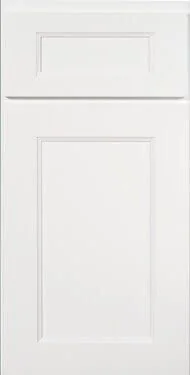
Quality MDF shaker cabinet door sample
Quality MDF

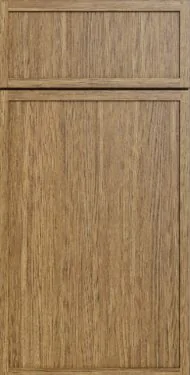
Solid wood shaker cabinet door sample

Solid wood

Best suited to
Painted finishesStained & natural finishes
Surface
Smooth, uniformNatural grain & character
Seasonal movement
Generally lowerExpands & contracts with humidity
Waterproof?
NoNo

Question 02

Why can painted wood doors develop lines at the joints?

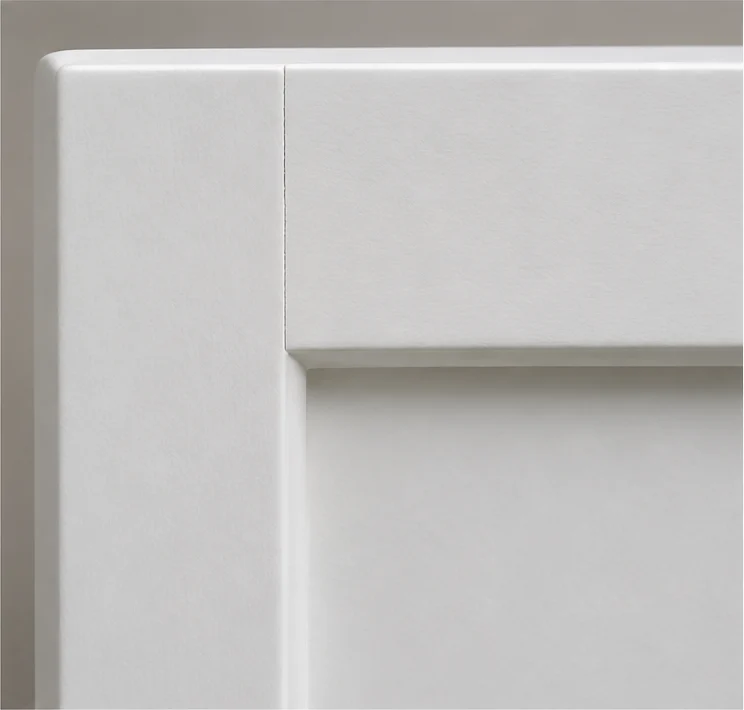
Wood expands and contracts as indoor humidity changes. On a painted door, that movement can create hairline cracks in the paint where the horizontal rails meet the vertical stiles — without the door itself splitting.

One-piece MDF doors avoid these frame joints altogether. Five-piece MDF doors and wood-frame/MDF-panel doors still have joints. MDF moves less with humidity, but it isn't immune to moisture or warping.

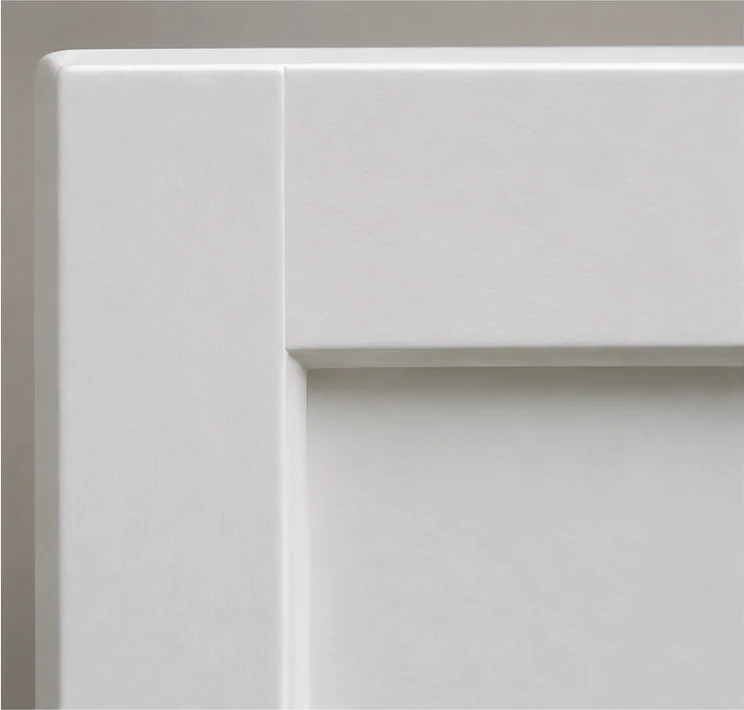
Close-up of a painted white shaker door corner with an intact finish

Intact finish

Close-up of a painted white shaker door corner showing a hairline crack at the rail and stile joint

Hairline finish crack at the joint

Illustrative examples, not photos of an actual customer door.

Question 03

What's the difference between one-piece and five-piece doors?

A five-piece door is built from four frame pieces — two vertical stiles and two horizontal rails — around a center panel. That's the classic shaker look, and it's where the joints mentioned above live.

A one-piece MDF door is machined from a single sheet to create the same look, so there are no frame joints for paint to crack across. Ask us which construction a door uses — we're happy to show you samples side by side.

panel

Five-piece door

Stiles + rails around a panel. Joints at each corner.

routed recess

One-piece MDF door

Machined from a single sheet. No frame joints.

Simplified illustration. Both styles can deliver the same shaker look.

Question 04

What do we recommend for rental properties?

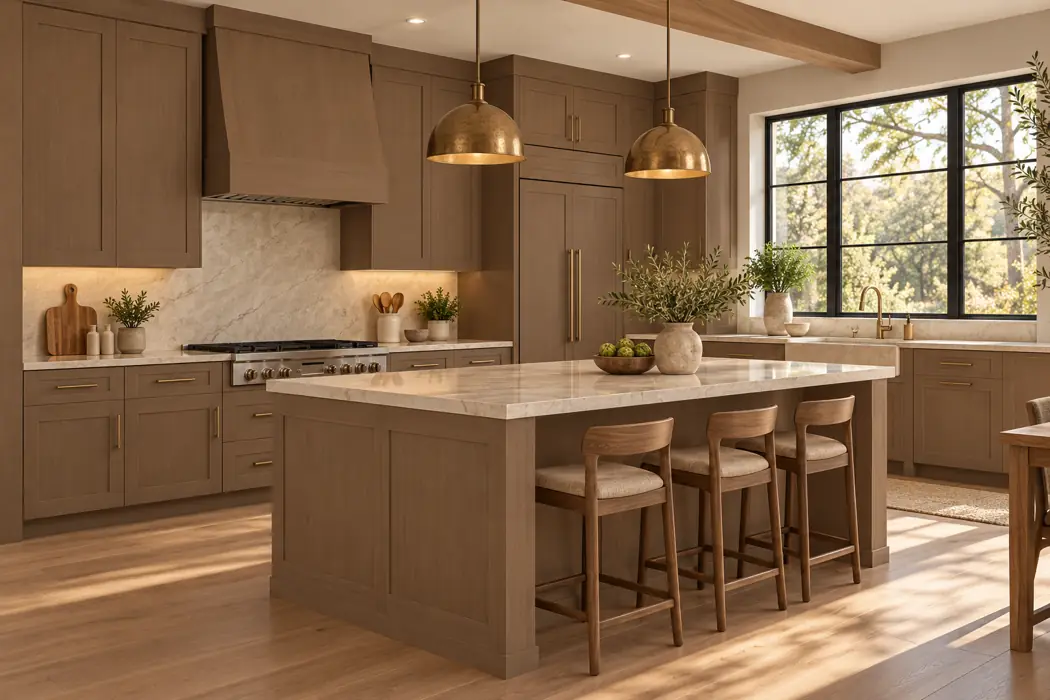
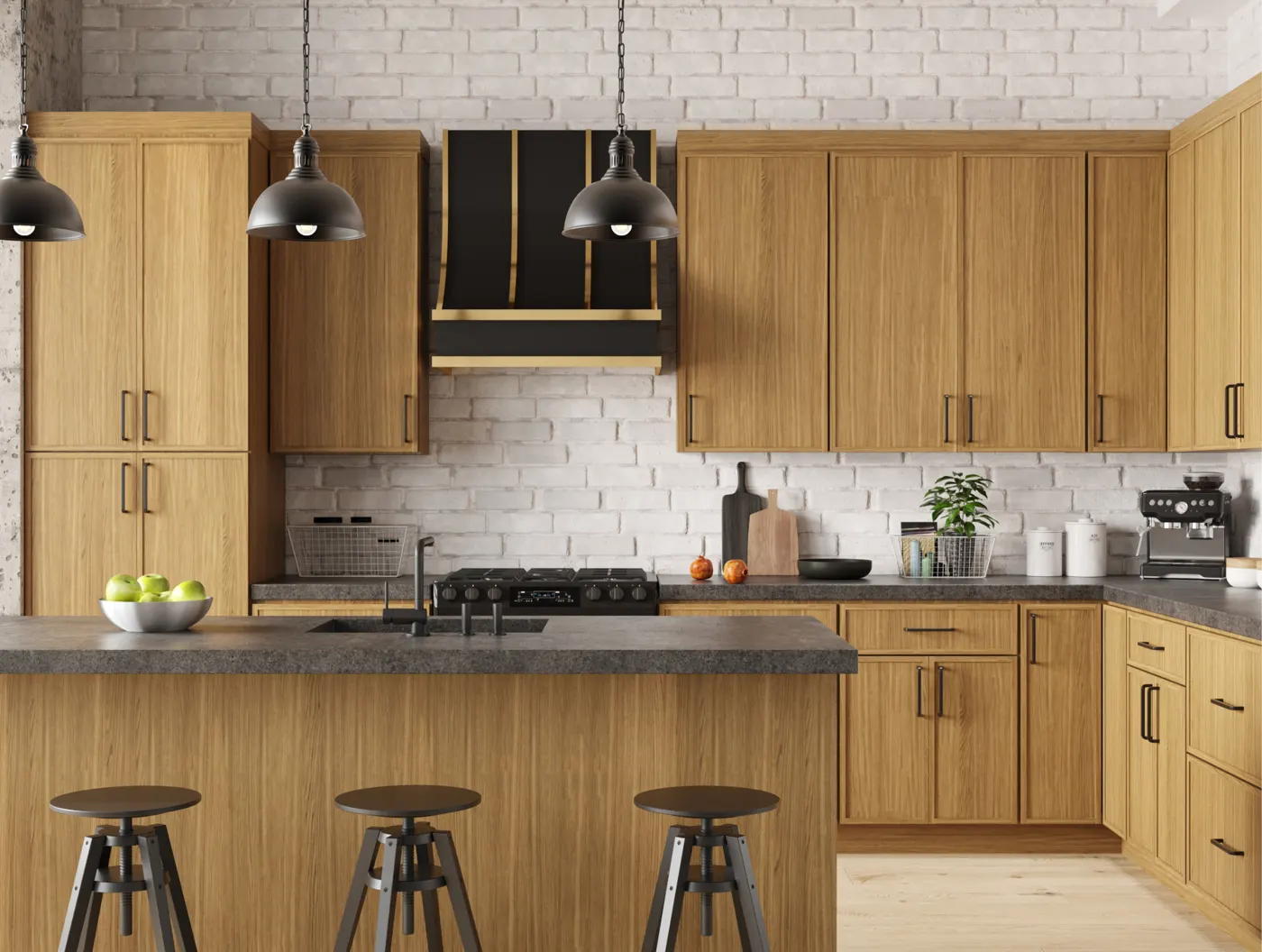
We often favor stained wood, especially medium tones with visible grain, because it can disguise minor wear and make small touch-ups less noticeable between tenants.

This is our practical preference, not a guarantee that stain is tougher than paint. If you'd rather go painted in a rental, prioritize a proven finish and sound door construction.

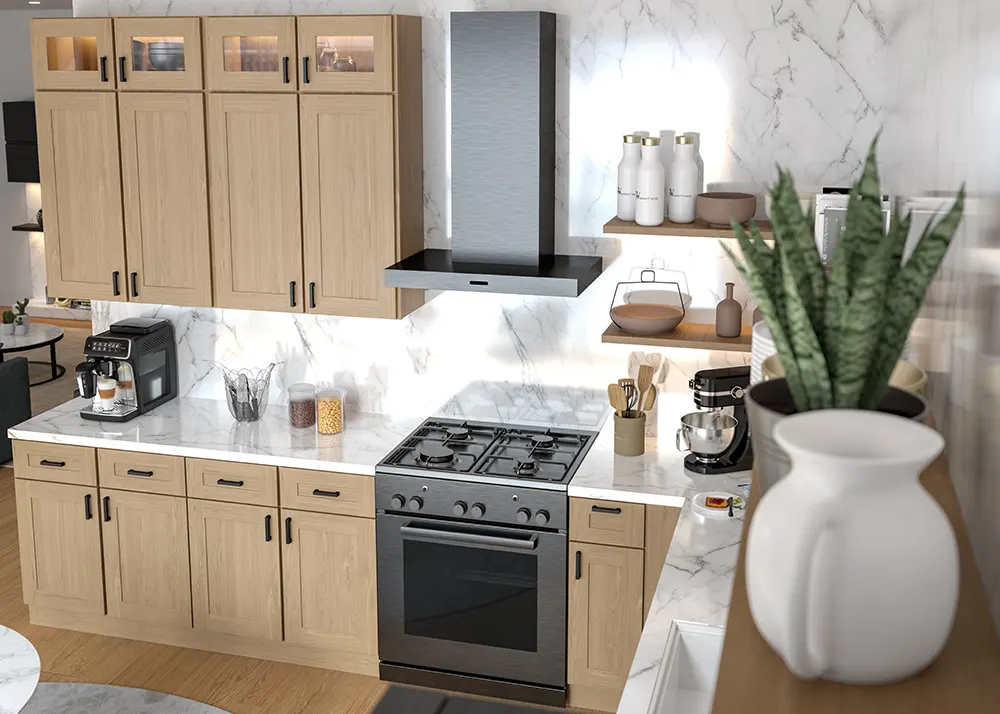
Kitchen with medium-tone stained wood shaker cabinets and visible grain
Medium stained tones with visible grain are forgiving in busy, high-turnover spaces.

Question 05

Is paying more for a better finish worthwhile?

A demonstrably better finish can reduce future repair or replacement costs, but price alone doesn't prove quality. Ask about finish testing, care requirements and touch-up support.

ANSI/KCMA A161.1 certification includes finish-performance testing. And a quick note on a term you'll see often: ready-to-assemble (RTA) describes how a cabinet is assembled, not its quality.

Good questions to ask about any finish

  • Has the finish been performance-tested (for example, ANSI/KCMA A161.1 certification)?
  • What cleaning and care does the manufacturer require?
  • Is touch-up support available — kits, markers or matched paint?
  • How is the door constructed — one-piece or five-piece?

Question 06

Can damaged doors be repaired?

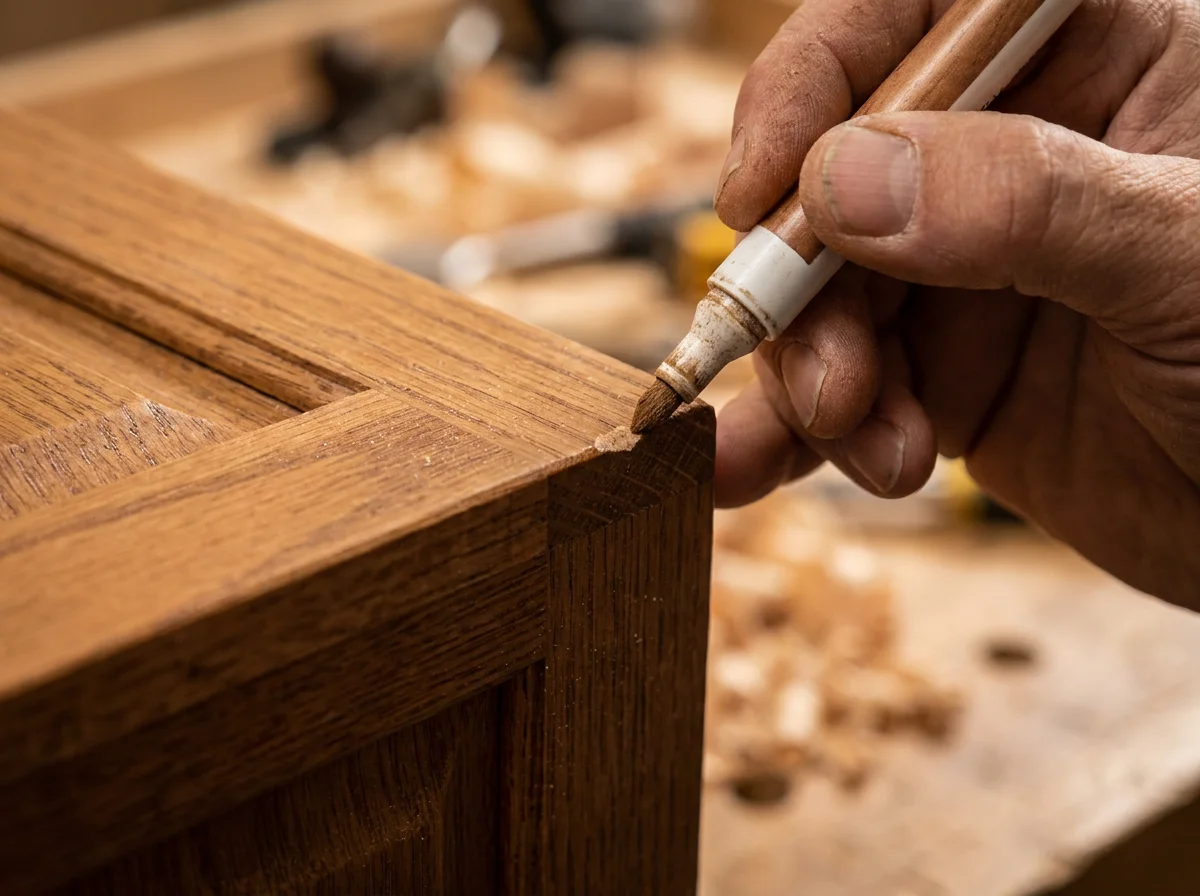
Minor chips and scratches can often be touched up, although the color and sheen may not blend perfectly. Significant MDF swelling can be permanent and may require replacing the door. Solid wood can also suffer water damage.

Swelling alone doesn't tell you whether the cause was the finish, exposure or care — so if you're seeing damage, reach out and we'll help you sort out next steps.

A hand using a touch-up marker on a small chip at the edge of a stained oak cabinet door
Small chips on stained doors can often be touched up with a matching marker.
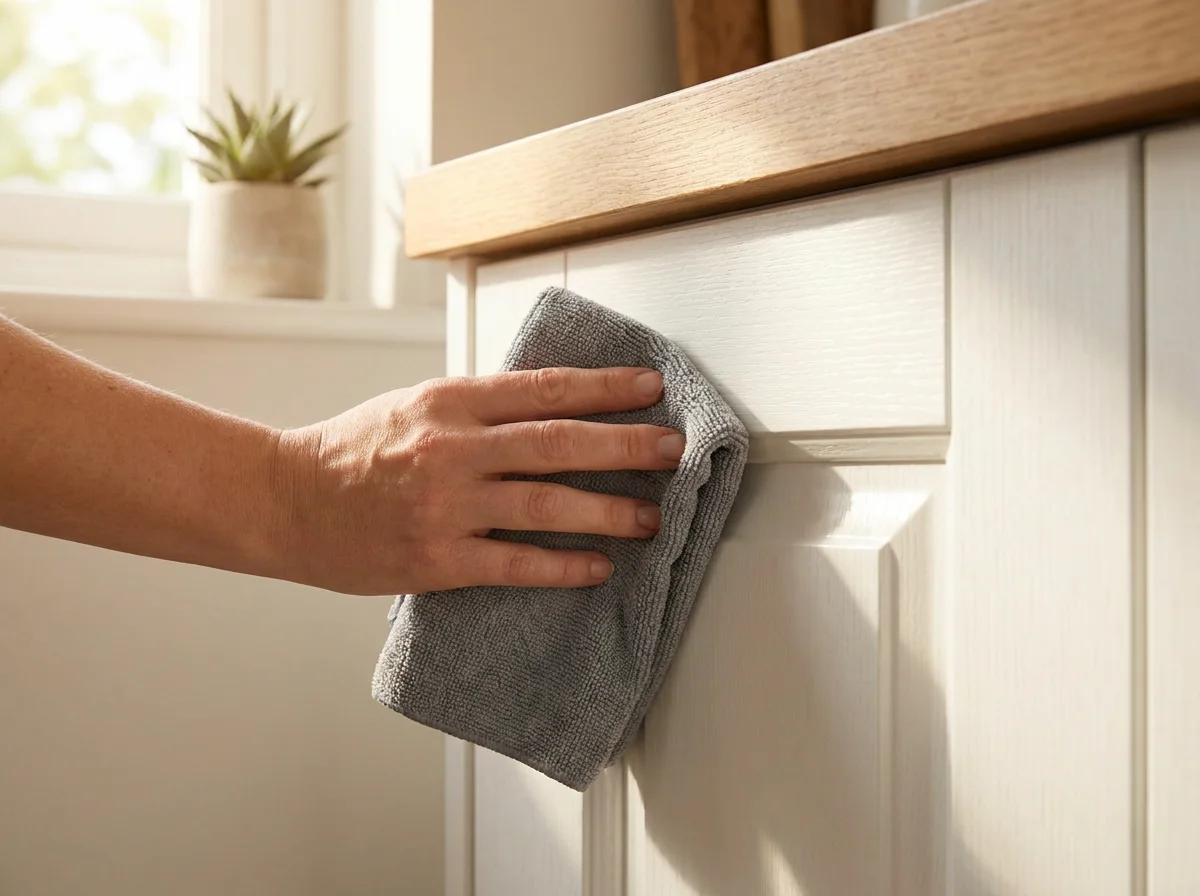
A hand wiping a painted white shaker cabinet door with a soft microfiber cloth

Care & maintenance

Protect your investment

Like other frequently used surfaces, cabinet finishes need a little care. Good care helps extend their life — though no finish is immune to wear.

Do

  • ✓Follow the manufacturer's cleaning instructions
  • ✓Gently remove grease buildup
  • ✓Wipe spills promptly and dry the surface
  • ✓Address leaks right away
  • ✓Maintain recommended indoor humidity

Avoid

  • ✕Abrasive cleaners and scrub pads
  • ✕Standing water on doors or toe kicks
  • ✕Wet towels draped over doors

Sources

Conestoga — MDF doors · Composite Panel Association — dimensional stability · KCMA — certification · KraftMaid — care · KraftMaid — touch-ups

Want to see the difference up close?

Stop by our Staunton design office to compare painted and stained doors side by side — honest guidance, no pressure.